
Delmira Agustini · El intrusoA light you begin to depend on
How do you become close to another person and endure how vulnerable that closeness makes you?
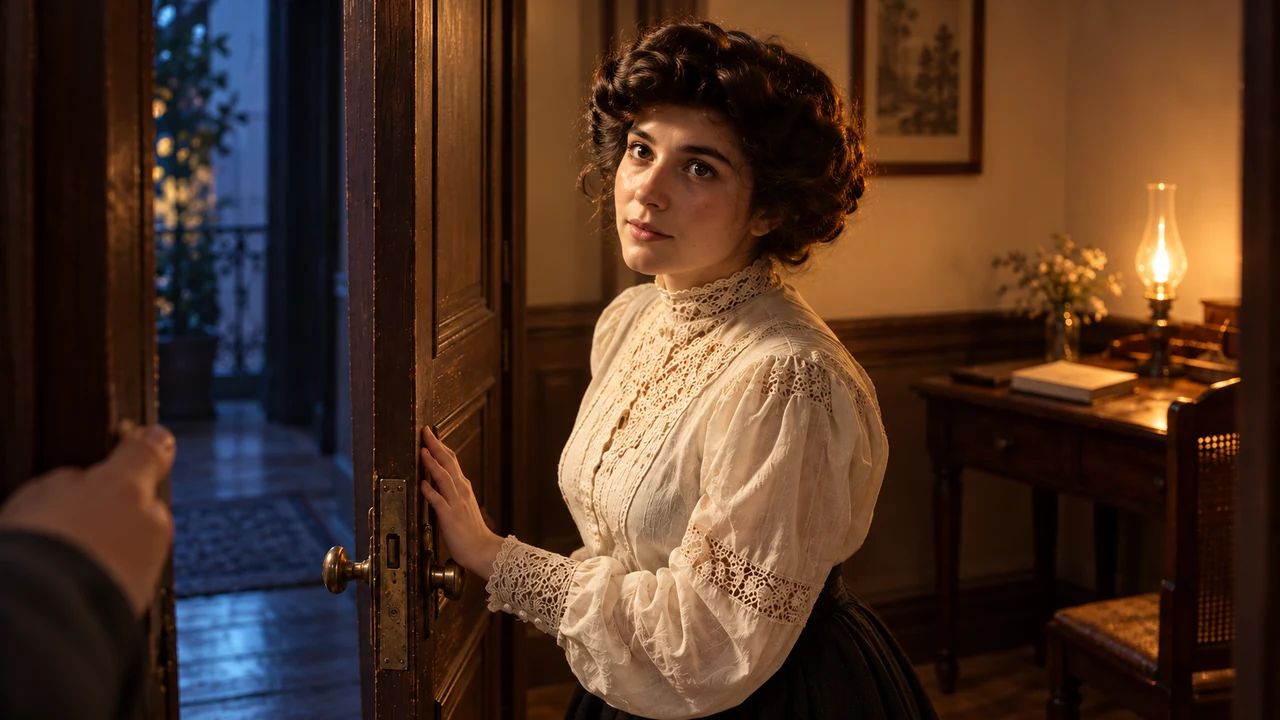
In Agustini's sonnet the shadow of the entering beloved illuminates the tragic night. Afterwards the speaker laughs when he laughs, sings after him, and sleeps at his feet. Intimacy enters her movements, her sleep, even her own shadow, which carries his scent of spring.
She blesses that night and trembles whenever his hand touches the lock. Inside a single confession we hear both rapture and the vulnerability of someone whose life has become so tightly bound to another's. I do not want to choose only ecstasy or only alarm on her behalf. The question of real intimacy begins where both must be heard together.
El intruso (The Intruder)
The sonnet “El intruso” (“The Intruder,” from El libro blanco, Montevideo, 1907) by Uruguayan poet Delmira Agustini answers the question: how do you become close to another person and endure how vulnerable and dependent that closeness makes you? The speaker laughs when her beloved laughs, sings after him, and sleeps at his feet. She blesses their meeting and trembles whenever his hand touches the door lock.
Love, the night was tragic and weeping
when your golden key sang in my lock;
then, the door opened upon the freezing shadow,
your shadow was a stain of light and whiteness.
Everything here was illuminated by your diamond eyes;
your fresh lips drank from my cup,
and upon my pillow rested your fragrant head;
I was enchanted by your boldness and adored your madness.
And today I laugh if you laugh, and sing if you sing;
and if you sleep, I sleep like a dog at your feet.
Today I carry even in my shadow your scent of spring;
and I tremble if your hand touches the lock,
and I bless the weeping and dark night
that blossomed in my life your early mouth!
Amor, la noche estaba trágica y sollozante
cuando tu llave de oro cantó en mi cerradura;
luego, la puerta abierta sobre la sombra helante,
tu sombra fue una mancha de luz y de blancura.
Todo aquí lo alumbraron tus ojos de diamante;
bebieron en mi copa tus labios de frescura,
y descansó en mi almohada tu cabeza fragante;
me encantó tu descaro y adoré tu locura.
Y hoy río si tu ríes, y canto si tú cantas;
y si tú duermes, duermo como un perro a tus plantas.
Hoy llevo hasta en mi sombra tu olor de primavera;
y tiemblo si tu mano toca la cerradura,
¡y bendigo la noche sollozante y oscura
que floreció en mi vida tu boca tempranera!
Staying Beside the Question
In this image, the contemporary author stands beside his interlocutor (Delmira Agustini · El intruso). This encounter is created for a conversation through the poem; the contemporary participant's likeness is grounded in photographs of Oleksandr Bochkala.
The image does not claim a literal historical meeting—it opens a shared space where the poet’s question is addressed to us today and asks for a personal answer.
Historical Context & Keys to the Text
Critical edition and manuscript archive of Delmira Agustini: Prof. Alejandro Cáceres (Southern Illinois University, Edición crítica de la obra poética), Prof. Sylvia Molloy (New York University — NYU), and Biblioteca Nacional de Uruguay (Archivo Delmira Agustini, Montevideo).