Oleksandr Bochkala · On Catharsis Groove & the Meta-Renaissance
There are questions and feelings that make us human across all ages.
What it means to be alive and mortal — in love and parting, in the birth of children, in creation, in every passing moment of our journey through time.
People asked these questions long before us. They loved and lost those they loved. Feared death, tried to understand what would remain after them. Searched for their place among others. Argued with gods and fate. Suffered from injustice. Grew old. Remembered their youth. Made things they wished to leave behind.
They were not the same as us. They lived in other cultures, believed in other gods. Understood love, selfhood, freedom, and the order of the world differently. They are gone, yet the words born of their love, fear, desire, or loss are still alive. Across hundreds and thousands of years, those words can become part of my experience and yours, my thoughts and yours.
They left behind the possibility of an encounter — poetry that preserves a personal “I” beyond past and future, right here in our present.
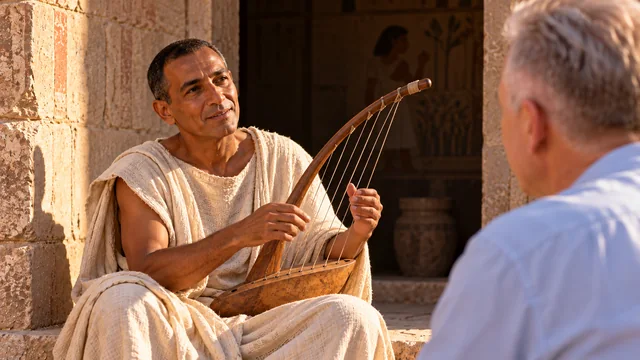
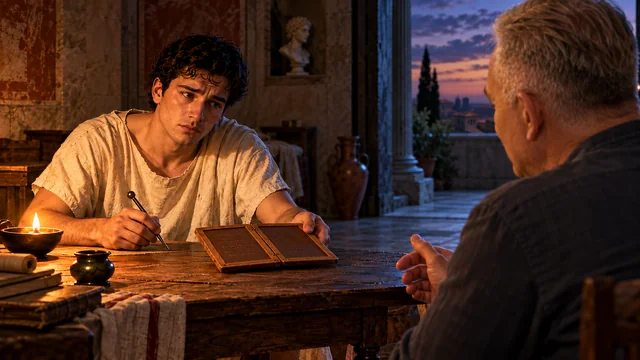
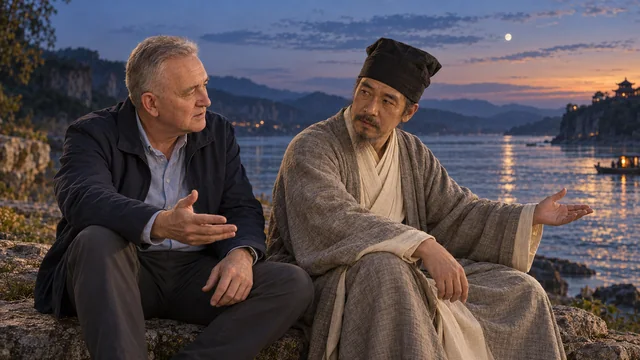
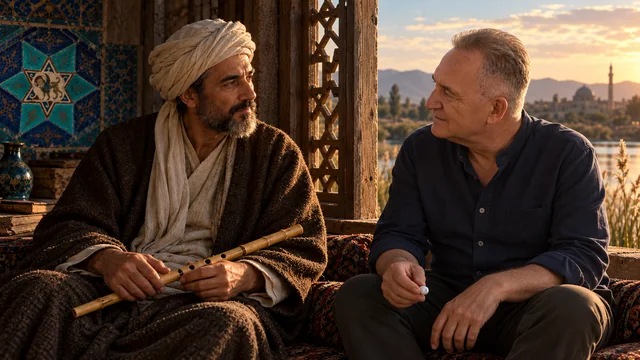
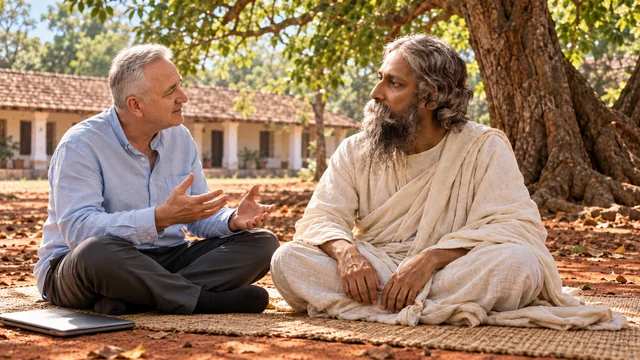
CATHARSIS GROOVE is a series of encounters with people of other eras and cultures in search of answers. A conversation through a hymn to a goddess — with Enheduanna, poet and exiled priestess of ancient Ur. Through Odi et amo — with Catullus, crucified by his own love upon the cross of simultaneous hatred and passion. An encounter through Sappho’s lines with a woman whose body burns with fire and whose voice is paralyzed by love.
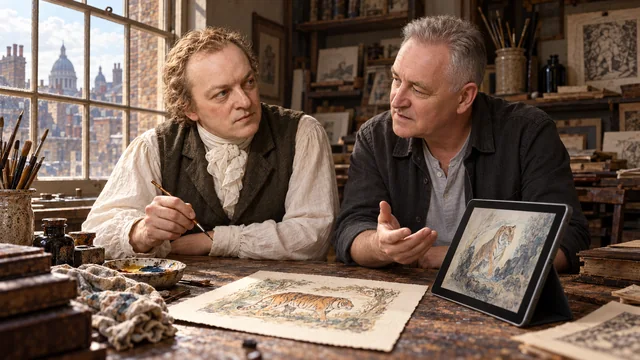
Today, artificial intelligence has entered this conversation — not as an author. It is an instrument and digital medium, an apprentice and partner, a student and teacher. It can be obedient clay or unyielding marble, resisting the design and suggesting unexpected forms.
In my journey, the 21st century is the era of the Meta-Renaissance. Every author today, like a Renaissance master, can assemble a crew of digital apprentices. Not to imitate someone else’s voice, but, as ever, to express and preserve a personal “I.”
AI devalues skills that once took years of apprenticeship. Yet human creation is not equal to craft. As ever, “Man is the measure of all things” in art. Not only through the choice of paint, canvas, musical instrument, or camera lens, or through the invention of a personal method.
In 1917, Marcel Duchamp presented Fountain — a factory-made porcelain urinal signed R. Mutt. Duchamp did not fashion the object with his own hands.
His artistic act lay elsewhere: in choosing, moving the object into a new context, naming it, and posing a question.
That line continued through readymades, conceptual art, pop art, works produced by large studio workshops, and systemic and generative music.
What in the 21st century turns an object into art? The craftsman’s hand? Physical form? Context? Choice? The human act that compels us to see a familiar object anew?
Fountain, like AI, does not prove that craft no longer matters. Yet both show that physical fabrication does not exhaust authorship or creation.
Artificial intelligence can make any “urinal” in any style. Yet to define authorship, the decisive questions remain:
“Who asked the question? Who shifted the context? Who chose? Who rejected the other possibilities? Who answers for the statement?”
“Man is the measure of all things” through a personal search for answers, personal meaning, and feelings one wishes to share with others.
Through the question — what does this mean for me and for you?
AI does not grow old. Does not bear children. Does not lose those it loves. Does not wake with a memory that alters the entire day. Does not carry lived years within a body. It cannot love what it is bound to lose. Create what it may never live to see completed. Search for meaning while knowing there is no answer.
AI can simulate feelings, generate forms. Generation can replace craft, but it is not equal to creation.
A human being enters creation with an entire life — with body and memory, the conscious and the unconscious, love and fear, imagination and chance, relationships with other people and with the universe, and the awareness of one’s own finitude, when time is running out. And all of this is the human measure by which a person defines the meaning of their own statement and the weight of statements made by others.
In CATHARSIS GROOVE, AI does not ask the questions, does not shift the context, does not choose, and does not reject alternatives. AI is not the author of the statements. That is done by Oleksandr Bochkala, for whom CATHARSIS GROOVE is a personal journey into the poetry of the past, contemporary art, and technology. A human being searching for his own meaning in art, science, technology, and lived experience.
Authorship in CATHARSIS GROOVE is not measured by the number of manually crafted notes, words, or pixels. It lies in posing the question, choosing sources and technologies, creating the conditions for an encounter, adapting, setting rules and constraints, designing collisions, attending to chance, selecting and rejecting, revising the design, editing, naming, framing the release, and taking responsibility for the final statement.
Perhaps the future will bring another kind of art — a conversation of immortal SI with immortal SI and mortal human beings in the language of generative imagery. It may become a conversation about what it means to be immortal among immortals, and mortal among immortals.
But CATHARSIS GROOVE is about something else. It is a conversation between one human being and another in the language of images created with the help of artificial intelligence. It began 47 years ago from a bookstore shelf in a country that no longer exists. With a small book in a blue leather binding bearing a mysterious title — The Epic of Gilgamesh. And it continues today.