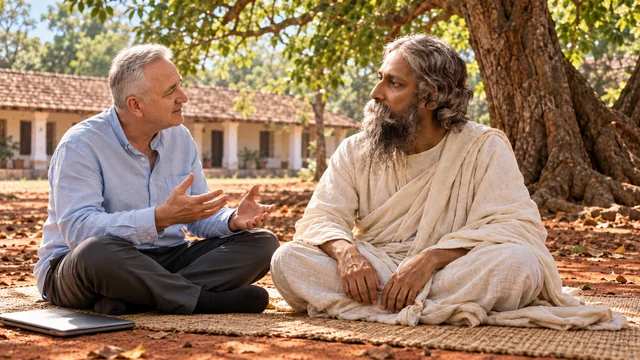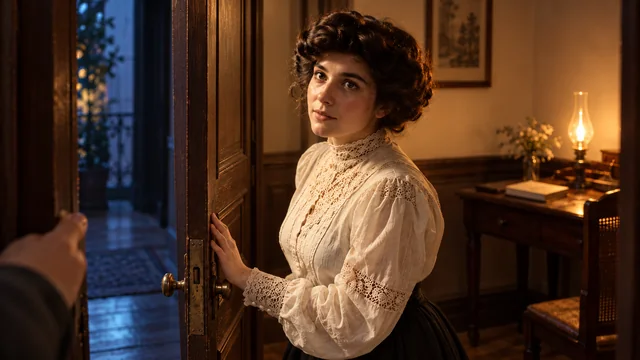
Paul Laurence Dunbar, We Wear the MaskHiding the face in order to preserve the person
How do you preserve yourself when showing yourself openly to the world is dangerous?
In Dunbar's poem a collective 'we' smiles with torn and bleeding hearts and sings while pain sounds in an appeal to Christ. In African American history, behind that mask stands a world of racism: showing that world everything you endure does not mean being heard or protected.
The mask conceals a person and can also guard what he refuses to hand over to an indifferent gaze. The poem itself reveals the existence of hidden pain, yet does not demand dropping one's defense before everyone. What does it mean to remain oneself under such conditions? Meeting Dunbar makes me question any easy demand for candor that never asks what price must be paid for it.
We Wear the Mask
Paul Laurence Dunbar’s rondeau “We Wear the Mask” (Lyrics of Lowly Life, New York, 1896) reveals a paradox of human dignity under oppression: the smiling mask conceals torn hearts, while the lines “Why should the world be over-wise” and “let the world dream otherwise” turn refusal to display pain before a voyeuristic public into an act of inward sovereignty.
We wear the mask that grins and lies,
It hides our cheeks and shades our eyes,—
This debt we pay to human guile;
With torn and bleeding hearts we smile,
And mouth with myriad subtleties.
Why should the world be over-wise,
In counting all our tears and sighs?
Nay, let them only see us, while
We wear the mask.
We smile, but, O great Christ, our cries
To thee from tortured souls arise.
We sing, but oh the clay is vile
Beneath our feet, and long the mile;
But let the world dream otherwise,
We wear the mask!
Staying Beside the Question
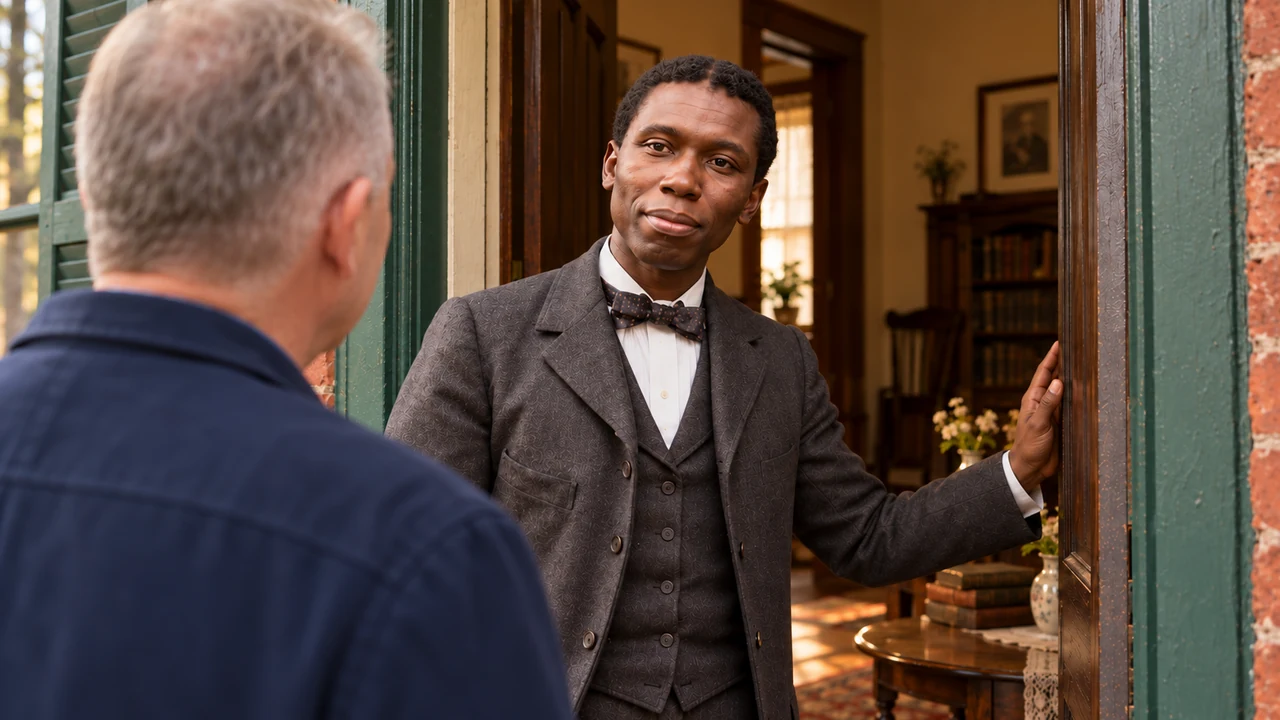
In this image, the contemporary author stands beside his interlocutor (Paul Laurence Dunbar, We Wear the Mask). This encounter is created for a conversation through the poem; the contemporary participant's likeness is grounded in photographs of Oleksandr Bochkala.
The image does not claim a literal historical meeting—it opens a shared space where the poet’s question is addressed to us today and asks for a personal answer.
Historical Context & Keys to the Text
Critical collected edition and textual scholarship: Prof. Joanne M. Braxton (College of William & Mary, University of Virginia Press 1993), Prof. Henry Louis Gates Jr. (Harvard University), and Prof. Shelley Fisher Fishkin (Stanford University, Paul Laurence Dunbar Digital Collection).