Rigveda X.129, Nasadiya SuktaAt the beginning of the world, a question remains
Whence did the world arise if its beginning may have had no witness?
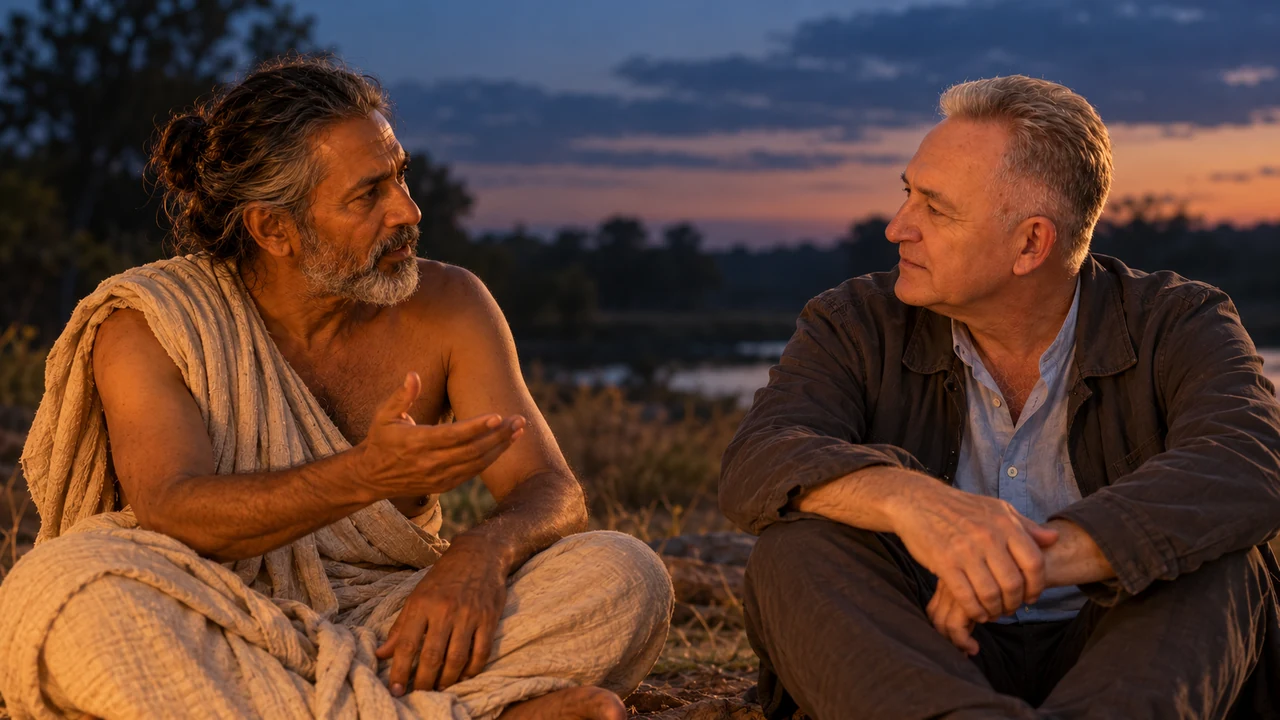
The Nasadiya Sukta carries thought back to a point where day and night, death and immortality, even being and non-being cannot yet be told apart. We try to picture a beginning through everything we know of the world, and one by one the hymn strips those familiar distinctions away. Even the gods came later. Who then could tell how all this came to be?
The final lines admit non-knowing even in the One who looks down from highest heaven. The search for origin continues without the guarantee of a final answer. That possibility draws me in: inside a sacred hymn, doubt is given a voice and remains part of the conversation about the origin of the world.
Nasadiya Sukta (Hymn of Creation)
The cosmogonic hymn “Nāsadīya Sūkta” (Rigveda 10.129, stanzas 1–7, c. 1200–900 BCE) traces the origin of the cosmos back before existence and non-existence, where “That One breathed windlessly by its own impulse.” Its climax questions whether even the Overseer in highest heaven knows how creation arose. The modern translation preserves Vedic terms free of later philosophical overlays.
India at the close of the second millennium BCE. A time when the older hymns to the storm-god Indra slaying the dragon Vritra no longer suffice to answer how the world began. An unknown poet of the tenth book of the Rigveda carries thought backward—to a point where neither earth, nor sky, nor stars, nor the gods themselves yet exist.
At that threshold there is neither death nor immortality. No sign divides night from day. There is only darkness hidden in darkness, and within it the windless breathing of the One, warmed by primordial heat from which the first movement of desire and thought awakens.
Then there was neither non-being nor being; there was no airspace, nor the sky beyond it.
What covered it all? Where? In whose shelter? Was water there — impenetrable, unfathomably deep?
Then there was neither death nor immortality; there was no distinguishing sign between night and day.
That One breathed without wind by its own inner power, and apart from it there was nothing else at all.
In the beginning darkness was hidden by darkness; all this was surging fluid without a single mark.
That emerging being which was covered by emptiness — by the power of primordial heat was born as That One.
In the beginning desire came upon it, which became the first seed of mind.
Searching within their hearts with insightful thought, the sages found in non-being the bond of being.
Their measuring cord was stretched across: was there a below then, was there an above?
There were seed-givers, there were mighty powers: below was inner power, above was the creative impulse.
Who truly knows, who can declare here from where it was born, from where this creation arose?
The gods came after the birth of this world — so who knows from where it first arose?
From where this creation arose, whether someone formed it or whether no one did —
the one who looks upon this world from the highest sky, he alone knows it — or maybe even he does not know.
nā́sad āsīn nó sád āsīt tadānī́ṃ nā́sīd rájo nó vyòmā paró yát |
kím ā́varīvaḥ kúha kásya śármann ámbhaḥ kím āsīd gáhanaṃ gabhīrám ||
ná mṛtyúr āsīd amṛ́taṃ ná tárhi ná rā́tryā áhna āsīt praketáḥ |
ā́nīd avātáṃ svadháyā tád ékaṃ tásmād dhānyán ná paráḥ kíṃ canā́sa ||
táma āsīt támasā gūḷhám ágre 'praketáṃ saliláṃ sárvam ā idám |
tuchyénābhv ápihitaṃ yád ā́sīt tápasas tán mahinā́jāyataíkam ||
kā́mas tád ágre sám avartatā́dhi mánaso rétaḥ prathamáṃ yád ā́sīt |
sató bándhum ásati nír avindan hṛdí pratī́ṣyā kaváyo manīṣā́ ||
tiraścī́no vítato raśmír eṣām adháḥ svid āsī́3d upári svid āsī3t |
retodhā́ āsan mahimā́na āsan svadhā́ avástāt práyatiḥ parástāt ||
kó addhā́ veda ká ihá prá vocat kúta ā́jātā kúta iyáṃ vísṛṣṭiḥ |
arvā́g devā́ asyá visárjanenā́thā kó veda yáta ābabhū́va ||
iyáṃ vísṛṣṭir yáta ābabhū́va yádi vā dadhé yádi vā ná |
yó asyā́dhyakṣaḥ paramé vyòman só aṅgá veda yádi vā ná véda ||
Staying Beside the Question
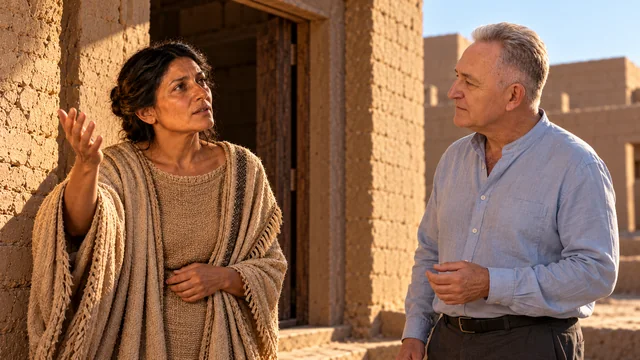
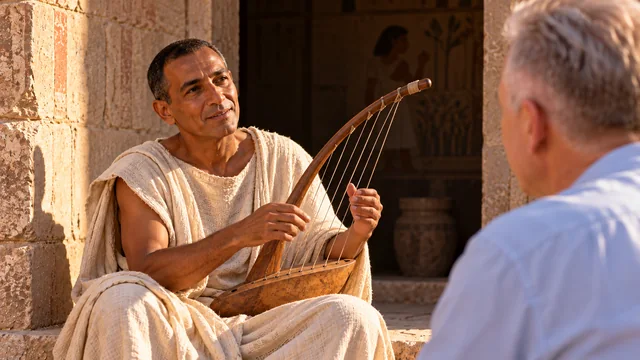
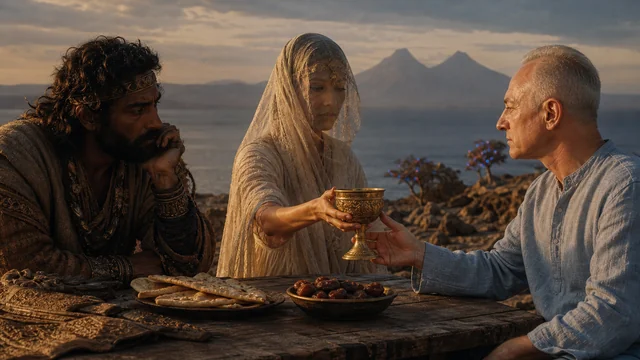
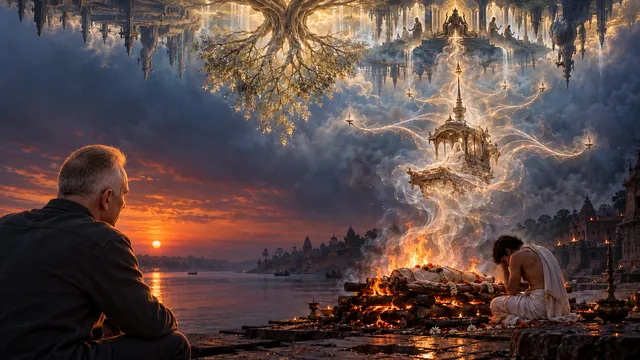
In this image, the contemporary author stands beside his interlocutor (Rigveda X.129, Nasadiya Sukta). This encounter is created for a conversation through the poem; the contemporary participant's likeness is grounded in photographs of Oleksandr Bochkala.
The image does not claim a literal historical meeting—it opens a shared space where the poet’s question is addressed to us today and asks for a personal answer.
Historical Context & Keys to the Text
Being (sat) and non-being (asat)
In Vedic Sanskrit, sat is the formed, stable world where things possess names and boundaries; asat is unformed non-being without support. The opening line strips both familiar poles away: before the world began, even the opposition between being and non-being did not yet exist.
That One breathed without wind by its own inner power (ānīd avātaṃ svadhayā tad ekam)
'That One' (tad ekam) is neuter in gender—beyond the male and female forms of the gods. It breathes without wind or air (avātam), sustained solely by its own inner power (svadhā). It is an image of life already pulsing before space itself exists.
Primordial heat (tapas) & desire as the seed of mind (kāma)
In the Nasadiya Sukta, the world arises not by an external command, but from inward intensity—tapas (the heat of fire, the warmth of an incubating embryo, concentrated spiritual fervor). Out of that heat awakens kāma—the first desire and longing for connection, which becomes the very first seed of mind (manas).
The sages' measuring cord (raśmi)
The word raśmi simultaneously means a ray of light, a chariot rein, and the measuring cord Vedic priests used to lay out the sacrificial altar on the ground. Stretched across the abyss, that cord draws the first boundary, dividing formlessness into above and below.
The one who looks from the highest sky (adhyakṣa)
Sanskrit adhyakṣa literally means 'one whose eye looks out from above'—the supreme witness gazing upon creation from the highest vault of the sky. And it is to him that the hymn directs its boldest turn: even that supreme witness knows the secret of the beginning—'or maybe even he does not know.'
Critical edition and Vedic philology: Prof. Stephanie W. Jamison (UCLA) & Prof. Joel P. Brereton (University of Texas at Austin, Oxford University Press 2014), Prof. Karl Friedrich Geldner (Philipps-Universität Marburg, Harvard Oriental Series), and Prof. Barend A. van Nooten & Prof. Gary B. Holland (UC Berkeley, 1994).