Qohelet · Ecclesiastes 3:1–15There is a time to embrace. And a time to let go.
How do we live in time when the meaning of the whole remains beyond our grasp?
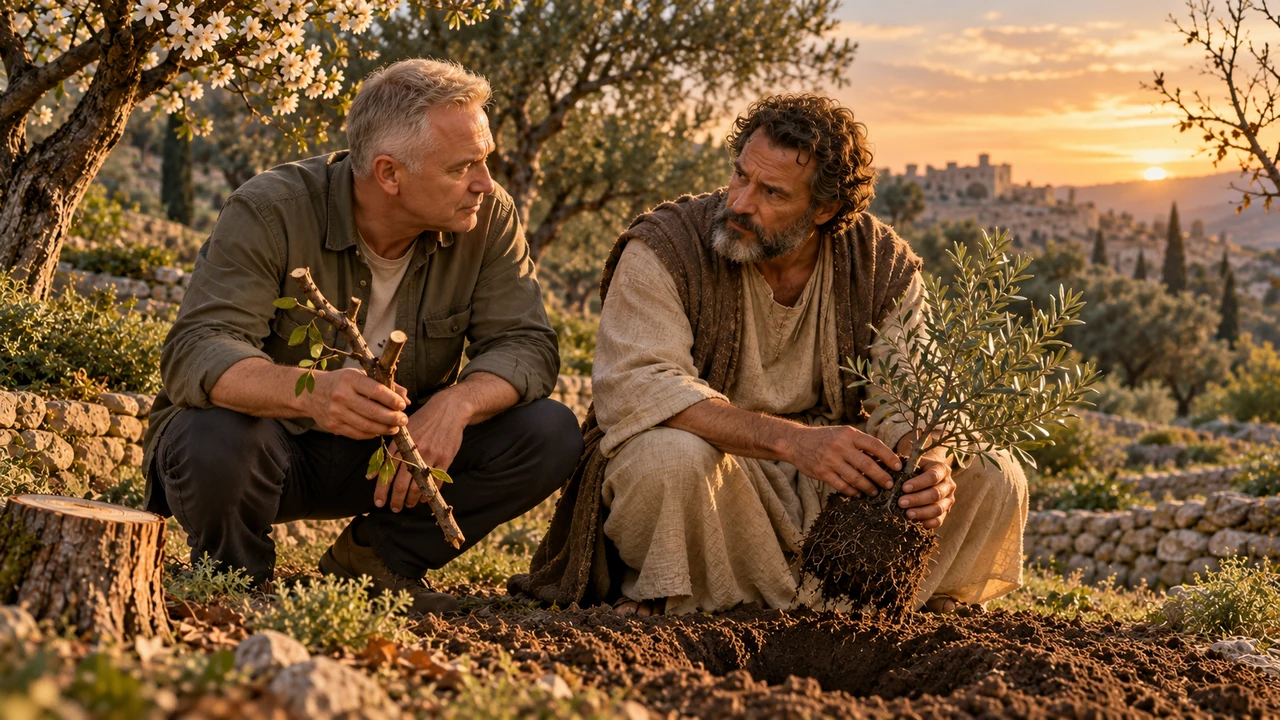
Ecclesiastes gives a place in life to opposite actions: keeping and casting away, silence and speech, loving and hating. What was right at one moment receives no promise of remaining right forever. And a human being is not given to fathom God's work from beginning to end.
Then comes an answer easily missed behind the famous list of seasons: to rejoice in life and find good in one's labor as a gift. The whole remains unfathomable, yet today demands participation. I read these lines wishing to understand my life in advance—and meet the possibility of living before full understanding arrives.
For Everything an Appointed Season (Qohelet / Ecclesiastes 3:1–15)
Qoheleth’s poem on the seasons of human life (Ecclesiastes 3:1–15, c. 250 BCE, Leningrad Codex B19A and Qumran scroll 4QQohᵃ) answers the question: how do we live in time and let go of what has passed when the meaning of the whole remains beyond our grasp? Opposite seasons follow one another in life: keeping and casting away, silence and speech, love and hate. The modern translation restores the exact meaning of Hebrew ʿôlām in verse 3:11—“eternity” in the human heart, not “world.”
Jerusalem in the 3rd century BCE. The rocky hills of Judea, where farmers clear limestone from the slopes, plant vineyards and uproot old vines, build stone walls and repair breaches after sieges. In the first two chapters, Qohelet tested everything by which a human being tries to outlast time—wisdom, palaces, gardens, wealth—and saw it all crumble before a shared death.
In the third chapter he lifts his gaze to the architecture of time itself. Popular culture often cuts this text off at verse eight, turning it into a soothing proverb. Yet in Qohelet the decisive turn begins at verse nine: if every act of building already has its appointed hour of tearing down, what remains to a human being from all their labor?
For everything there is an appointed season, and a time for every pursuit under the sky:
A time to be born and a time to die; a time to plant and a time to uproot what was planted;
A time to kill and a time to heal; a time to break down and a time to build up;
A time to weep and a time to laugh; a time to mourn and a time to dance;
A time to scatter stones and a time to gather stones; a time to embrace and a time to pull back from embracing;
A time to seek and a time to lose; a time to keep and a time to throw away;
A time to tear and a time to sew; a time to keep silent and a time to speak;
A time to love and a time to hate; a time of war and a time of peace.
What lasting gain does the worker have from all his exhausting toil?
I have seen the heavy task that God has given human beings to struggle with.
He has made everything beautiful in its time, and He has put eternity into their hearts, yet so that a human being cannot fathom the work that God has done from beginning to end.
I know that there is nothing better for them than to rejoice and do good in their life.
And also that every person should eat and drink and find joy in all their hard toil—this is the gift of God.
I know that whatever God does will endure forever; nothing can be added to it and nothing can be taken from it, and God has acted so that people stand in awe before Him.
What has been is already here, and what is to be has already been, and God brings back what has passed.
לַכֹּל זְמָן וְעֵת לְכָל־חֵפֶץ תַּחַת הַשָּׁמָיִם׃ (lakkōl zəmān wəʿēṯ ləḵol-ḥēp̄eṣ taḥaṯ haššāmāyim)
עֵת לָלֶדֶת וְעֵת לָמוּת עֵת לָטַעַת וְעֵת לַעֲקוֹר נָטוּעַ׃ (ʿēṯ lāleḏeṯ wəʿēṯ lāmûṯ; ʿēṯ lāṭaʿaṯ wəʿēṯ laʿăqôr nāṭûaʿ)
עֵת לַהֲרוֹג וְעֵת לִרְפּוֹא עֵת לִפְרוֹץ וְעֵת לִבְנוֹת׃ (ʿēṯ lahărôḡ wəʿēṯ lirpôʾ; ʿēṯ lip̄rôṣ wəʿēṯ liḇnôṯ)
עֵת לִבְכּוֹת וְעֵת לִשְׂחוֹק עֵת סְפוֹד וְעֵת רְקוֹד׃ (ʿēṯ liḇkôṯ wəʿēṯ liśḥôq; ʿēṯ səp̄ôḏ wəʿēṯ rəqôḏ)
עֵת לְהַשְׁלִיךְ אֲבָנִים וְעֵת כְּנוֹס אֲבָנִים עֵת לַחֲבוֹק וְעֵת לִרְחֹק מֵחַבֵּק׃ (ʿēṯ ləhašlîḵ ʾăḇānîm wəʿēṯ kənôs ʾăḇānîm; ʿēṯ laḥăḇôq wəʿēṯ lirḥōq mēḥabbēq)
עֵת לְבַקֵּשׁ וְעֵת לְאַבֵּד עֵת לִשְׁמוֹר וְעֵת לְהַשְׁלִיךְ׃ (ʿēṯ ləḇaqqēš wəʿēṯ ləʾabbēḏ; ʿēṯ lišmôr wəʿēṯ ləhašlîḵ)
עֵת לִקְרוֹעַ וְעֵת לִתְפּוֹר עֵת לַחֲשׁוֹת וְעֵת לְדַבֵּר׃ (ʿēṯ liqrôaʿ wəʿēṯ liṯpôr; ʿēṯ laḥăšôṯ wəʿēṯ ləḏabbēr)
עֵת לֶאֱהֹב וְעֵת לִשְׂנֹא עֵת מִלְחָמָה וְעֵת שָׁלוֹם׃ (ʿēṯ leʾĕhōḇ wəʿēṯ liśnōʾ; ʿēṯ milḥāmâ wəʿēṯ šālôm)
מַה־יִּתְרוֹן הָעוֹשֶׂה בַּאֲשֶׁר הוּא עָמֵל׃ (mah-yiṯrôn hāʿôśeh baʾăšer hûʾ ʿāmēl)
רָאִיתִי אֶת־הָעִנְיָן אֲשֶׁר נָתַן אֱלֹהִים לִבְנֵי הָאָדָם לַעֲנוֹת בּוֹ׃ (rāʾîṯî ʾeṯ-hāʿinyān ʾăšer nāṯan ʾĕlōhîm liḇnê hāʾāḏām laʿănôṯ bô)
אֶת־הַכֹּל עָשָׂה יָפֶה בְעִתּוֹ גַּם אֶת־הָעֹלָם נָתַן בְּלִבָּם מִבְּלִי אֲשֶׁר לֹא־יִמְצָא הָאָדָם אֶת־הַמַּעֲשֶׂה אֲשֶׁר־עָשָׂה הָאֱלֹהִים מֵרֹאשׁ וְעַד־סוֹף׃ (ʾeṯ-hakkōl ʿāśâ yāp̄eh ḇəʿittô gam ʾeṯ-hāʿōlām nāṯan bəlibbām mibblî ʾăšer lōʾ-yimṣāʾ hāʾāḏām ʾeṯ-hammaʿăśeh ʾăšer-ʿāśâ hāʾĕlōhîm mērōʾš wəʿaḏ-sôp̄)
יָדַעְתִּי כִּי אֵין טוֹב בָּם כִּי אִם־לִשְׂמוֹחַ וְלַעֲשׂוֹת טוֹב בְּחַיָּיו׃ (yāḏaʿtî kî ʾên ṭôḇ bām kî ʾim-liśmôaḥ wəlaʿăśôṯ ṭôḇ bəḥayyāyw)
וְגַם כָּל־הָאָדָם שֶׁיֹּאכַל וְשָׁתָה וְרָאָה טוֹב בְּכָל־עֲמָלוֹ מַתַּת אֱלֹהִים הִיא׃ (wəḡam kol-hāʾāḏām šeyyōʾḵal wəšāṯâ wərāʾâ ṭôḇ bəḵol-ʿămālô mattaṯ ʾĕlōhîm hîʾ)
יָדַעְתִּי כִּי כָּל־אֲשֶׁר יַעֲשֶׂה הָאֱלֹהִים הוּא יִהְיֶה לְעוֹלָם עָלָיו אֵין לְהוֹסִיף וּמִמֶּנּוּ אֵין לִגְרֹעַ וְהָאֱלֹהִים עָשָׂה שֶׁיִּרְאוּ מִלְּפָנָיו׃ (yāḏaʿtî kî kol-ʾăšer yaʿăśeh hāʾĕlōhîm hûʾ yihyeh ləʿôlām ʿālāyw ʾên ləhôsîp̄ ûmimmennû ʾên liḡrōaʿ wəhāʾĕlōhîm ʿāśâ šeyyirʾû milləp̄ānāyw)
מַה־שֶּׁהָיָה כְּבָר הוּא וַאֲשֶׁר לִהְיוֹת כְּבָר הָיָה וְהָאֱלֹהִים יְבַקֵּשׁ אֶת־נִרְדָּף׃ (mah-ššehāyâ kəḇār hûʾ waʾăšer lihyôṯ kəḇār hāyâ wəhāʾĕlōhîm yəḇaqqēš ʾeṯ-nirdāp̄)
Jerusalem of Qoheleth (Ecclesiastes): Temple Mount, Royal Porticoes & Sundial of the 28 Seasons in 3D
Enter a real-time 3D reconstruction of ancient Jerusalem in white meleke limestone: move the Judean sun across the stepped Ma’alot Ahaz sundial to watch the gnomon shadow traverse Qoheleth’s 14 pairs of opposites (Ecclesiastes 3:1–8), walk the Royal Portico of the Assembly, inspect the City of David, Gihon pools, and Kidron tombs, and hear the 10-string Levitical kinnor lyre.
Ready to Enter 3D Jerusalem of Qoheleth?
The 3D scene launches on click so it never traps page scrolling while you read Ecclesiastes 3. Inside you can orbit and zoom the camera, scrub the Solar Wheel of Time across all 14 pairs of seasons, switch weather from desert sirocco to morning mist (hevel), and hear the 10-string kinnor.
✦ Archaeological Dossier of this 3D Scene: Stepped Sundial of Ahaz, Royal Portico of Qoheleth, Temple Courts & Gihon Pools (Read)▼
Sanctuary Courts & Bronze Altar
At the center of the upper court stands the Sanctuary (Heikhal), built of radiant white meleke ashlar blocks and paneled inside with Lebanon cedar beams. Flanking the entrance porch (Ulam) rise the twin freestanding cast-bronze pillars Jachin (“He Establishes”) and Boaz (“In Him is Strength”), crowned with lotus-lily and pomegranate capitals. In the forecourt smokes the horned bronze altar of burnt offering alongside the Brazen Sea (Yam) supported by twelve bronze oxen.
The Sanctuary proportions (60×20×30 cubits) and tripartite plan closely parallel Iron Age Levant temple discoveries at Tel Motza (near Jerusalem) and Ain Dara.
Royal Portico of Assembly (Qoheleth)
The very title “Qoheleth” derives from the Hebrew root qahal—to convene a civic or scholarly assembly. Beneath this double-aisled portico of limestone columns, carved proto-Aeolic palm capitals, and cedar roof beams, the wisdom teacher dialogues with citizens, magistrates, and scribes. Its eastern balustrade commands a sweeping view over the Kidron gorge, framing the daily circuit of the sun and the passing of generations.
Proto-Aeolic stone capitals featuring stylized palm volutes have been excavated in the City of David royal quarter and the administrative palace at Ramat Rahel.
Terrace of the Stepped Sundial of Ahaz
Perched on the open eastern terrace above the Temple Mount escarpment stands the monumental stepped sundial (Ma’alot Ahaz). Its bronze-tipped gnomon casts a live shadow across fourteen carved limestone sectors and steps, corresponding to the fourteen polar pairs of human experience in Qoheleth’s Poem of Time (Eccl 3:1–8). Dragging the sun slider sweeps the real-time shadow from the hour of birth and planting to the hours of gathering stones, embracing, and silence.
Carved limestone sundials with radial hour divisions have been unearthed near the Temple Mount’s southwestern corner and at Qumran; stepped shadow-clocks (Ma’alot Ahaz) are attested in 2 Kings 20:9–11 and Isaiah 38:8.
Water Gate, Gihon Spring & Royal Garden Pools
Jerusalem’s survival amid the arid Judean hills depended on the karstic Gihon Spring at the foot of the eastern slope. A massive fortified Spring Tower guards the water source, channeling streams through rock-cut aqueducts into stepped limestone reservoirs feeding the Royal Gardens (Pardes). Here on the sheltered valley floor flourish pomegranate, fig, and balsam orchards celebrated in Qoheleth’s royal memoir.
The Gihon water system comprises the cyclopean Spring Tower, the rock-cut Siloam Channel (Channel II) with side sluices for irrigating Kidron garden plots, and Hezekiah’s 533-meter tunnel.
Staying Beside the Question
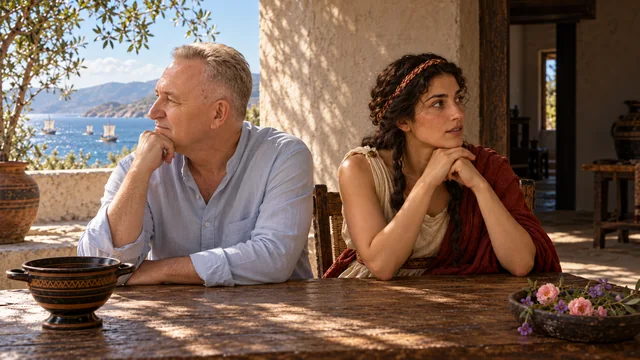
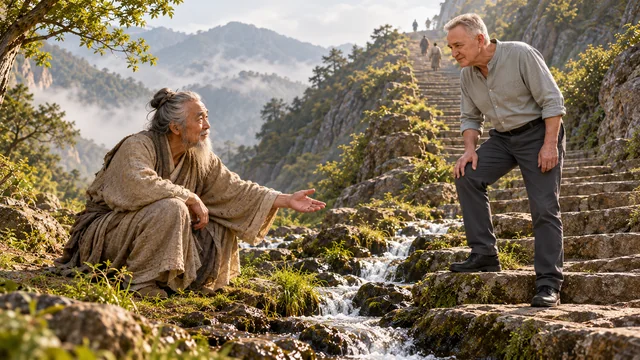
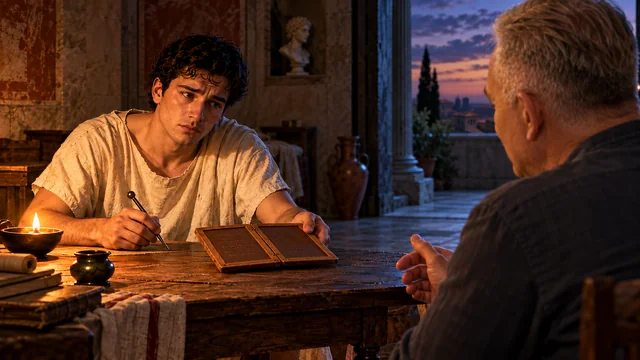
In this image, the contemporary author stands beside his interlocutor (Qohelet · Ecclesiastes 3:1–15). This encounter is created for a conversation through the poem; the contemporary participant's likeness is grounded in photographs of Oleksandr Bochkala.
The image does not claim a literal historical meeting—it opens a shared space where the poet’s question is addressed to us today and asks for a personal answer.
Historical Context & Keys to the Text
Appointed season (zəmān) & its time (ʿēṯ)
The opening line uses two distinct Hebrew words: zəmān—an appointed season or span—and ʿēṯ—the specific turning moment for an action. Fourteen polar pairs from birth to peace encompass the totality of human life, in which no single phase belongs to us forever.
To tear and to sew (liqrôaʿ / liṯpôr) · To mourn and to dance (səp̄ôḏ / rəqôḏ)
Behind these spare verbs stand physical Near Eastern rites. Upon hearing of a loved one's death, a person tore the hem of their garment (qərîʿâ) and sat in mourning silence; when the days of grief ended, they sewed the torn cloth back together and returned to speech.
Eternity in the human heart (hāʿōlām nāṯan bəlibbām)
The philosophical summit of the chapter (v. 11). In the Biblical Hebrew of Qohelet's era, ʿôlām means not the spatial 'world,' but 'eternity, boundless temporal depth.' God placed the hunger and intuition of eternity inside the human heart—yet without allowing the human mind to grasp the whole work from beginning to end.
Joy in labor as the gift of God (mattaṯ ʾĕlōhîm)
Qohelet's answer to the unfathomability of eternity is not despair. The capacity to eat one's bread, drink wine, do good, and experience joy inside one's own hard labor (ʿāmāl) amid passing time is named a direct gift of God.
God brings back what has passed (yəḇaqqēš ʾeṯ-nirdāp̄)
The Hebrew participle nirdāp̄ literally means 'that which is chased away, driven into the past.' Each arriving moment drives the previous one away. Yet God seeks out and brings back (yəḇaqqēš—the same verb as 'a time to seek' in v. 6) what has passed, keeping the circle of times unbroken.
Biblical Hebraistics and Qumran paleography: Prof. Choon-Leong Seow (Princeton Theological Seminary / Vanderbilt University, Anchor Yale Bible 1997), Prof. Michael V. Fox (University of Wisconsin–Madison), Prof. Eugene Ulrich (University of Notre Dame, DJD XVI — 4Q109), and Biblia Hebraica Quinta (Stuttgart).