Petrarch · Sonnet 134, Pace non trovoLiving inside what cannot be reconciled
Can I remain myself when no single description can contain me?
Petrarch knows neither peace nor war; he fears and hopes, burns and is ice. Opposites multiply as though every confession were incomplete without another that contradicts it. Love holds him between release and captivity, between life and death.
The sonnet allows this person to speak in full without forcing him to choose a single state. Strict form holds inner fracture. Meeting Petrarch brings me back to the question of my own 'I': how much of a living person remains unsaid whenever I try to explain myself consistently?
Canzoniere · Sonnet 134 (Pace non trovo)
Francesco Petrarch’s Sonnet 134 (“Pace non trovo, et non ò da far guerra,” c. 1340s CE, autograph Canzoniere codex Vat. lat. 3195) builds a portrait of consciousness out of fourteen lines of irreconcilable antitheses: “I burn, and am ice.” Strict sonnet architecture holds inner fracture intact without forcing false consistency onto a living voice.
Warfare I cannot wage, yet know not peace;
I fear, I hope, I burn, I freeze again;
Mount to the skies, then bow to earth my face;
Grasp the whole world, yet nothing can obtain.
His prisoner Love nor frees, nor will detain;
In toils he holds me not, nor will release;
He slays me not, nor yet will he unchain;
Nor joy allows, nor lets my sorrow cease.
Sightless I see my fair; though mute, I mourn;
I scorn existence, and yet court its stay;
Detest myself, and for another burn;
By grief I'm nurtured; and, though tearful, gay;
Death I despise, and life alike I hate:
Such, lady, dost thou make my wayward state!
Pace non trovo, et non ò da far guerra;
e temo, et spero; et ardo, et son un ghiaccio;
et volo sopra 'l cielo, et giaccio in terra;
et nulla stringo, et tutto 'l mondo abbraccio.
Tal m'à in pregion, che non m'apre né serra,
né per suo mi riten né scioglie il laccio;
et non m'ancide Amore, et non mi sferra,
né mi vuol vivo, né mi trae d'impaccio.
Veggio senza occhi, et non ò lingua et grido;
et bramo di perir, et cheggio aita;
et ò in odio me stesso, et amo altrui.
Pascomi di dolor, piangendo rido;
egualmente mi spiace morte et vita:
in questo stato son, donna, per voi.
Staying Beside the Question
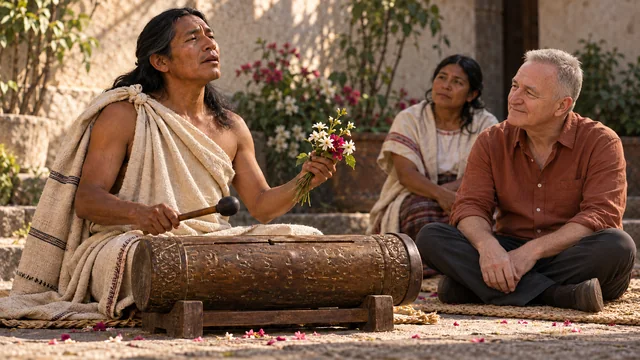
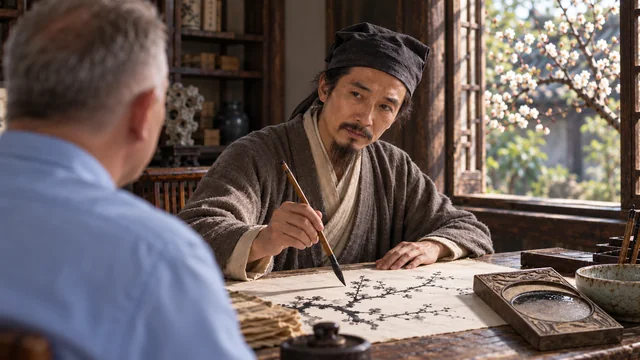
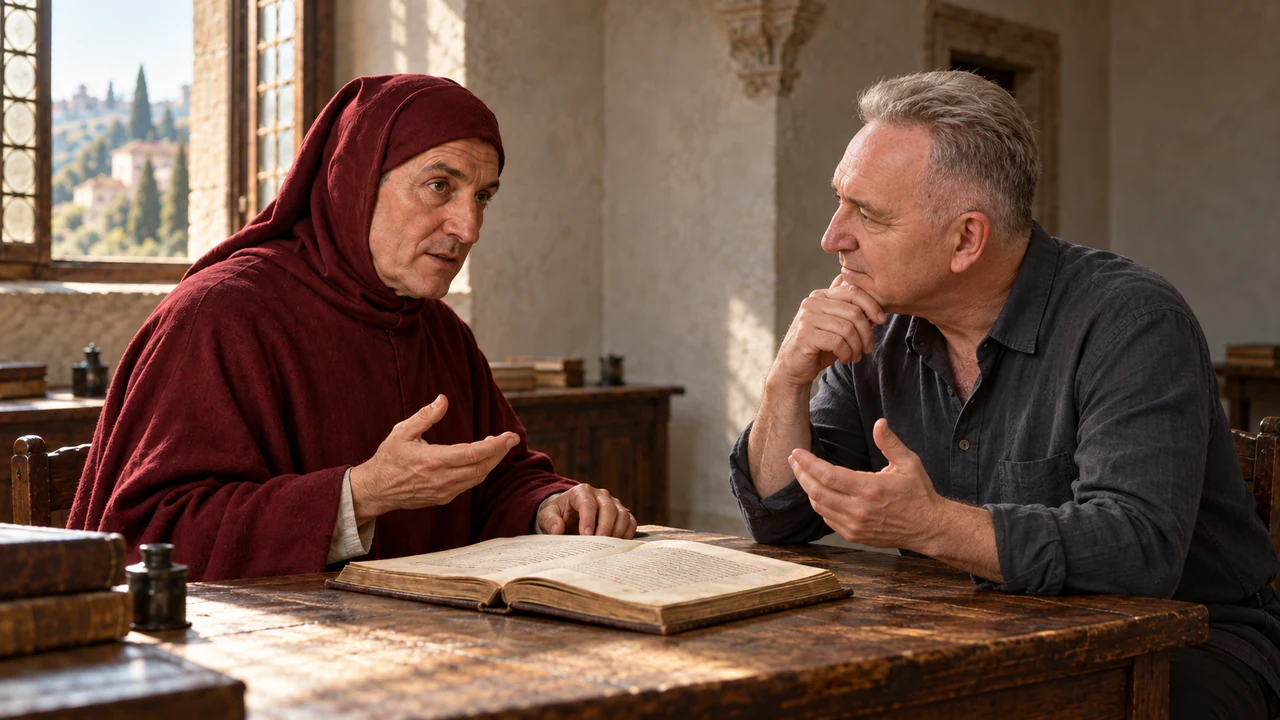
In this image, the contemporary author stands beside his interlocutor (Petrarch · Sonnet 134, Pace non trovo). This encounter is created for a conversation through the poem; the contemporary participant's likeness is grounded in photographs of Oleksandr Bochkala.
The image does not claim a literal historical meeting—it opens a shared space where the poet’s question is addressed to us today and asks for a personal answer.
Historical Context & Keys to the Text
Critical edition from Vatican autograph codex Vat. lat. 3195: Prof. Marco Santagata (Università di Pisa, Mondadori), Prof. Gianfranco Contini (Scuola Normale Superiore di Pisa, Einaudi), and Prof. Robert M. Durling (UC Berkeley, Harvard University Press).